Building a Villa in Spain as a Foreigner: One Client's Honest Account
Most people who contact us for the first time already have a picture in their head. They know roughly where they want to live, they have some ideas about the design, and they have a number in mind. What they tend to underestimate is how complex the path between that picture and a finished home actually is. Building a villa in Spain is not just a construction project. It is a legal, cultural, technical, and logistical undertaking and the team you choose to guide you through it determines almost everything about how it goes.
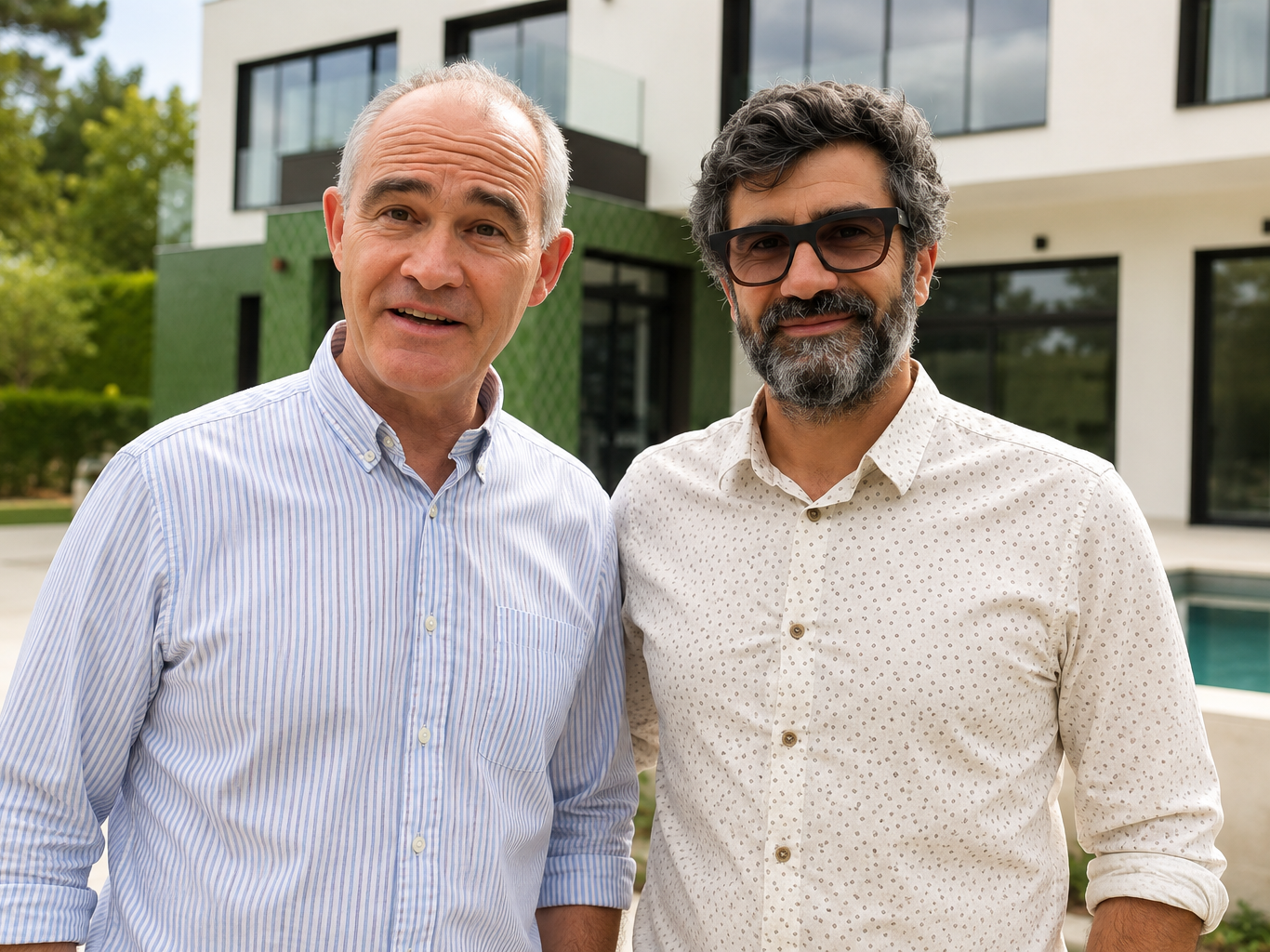
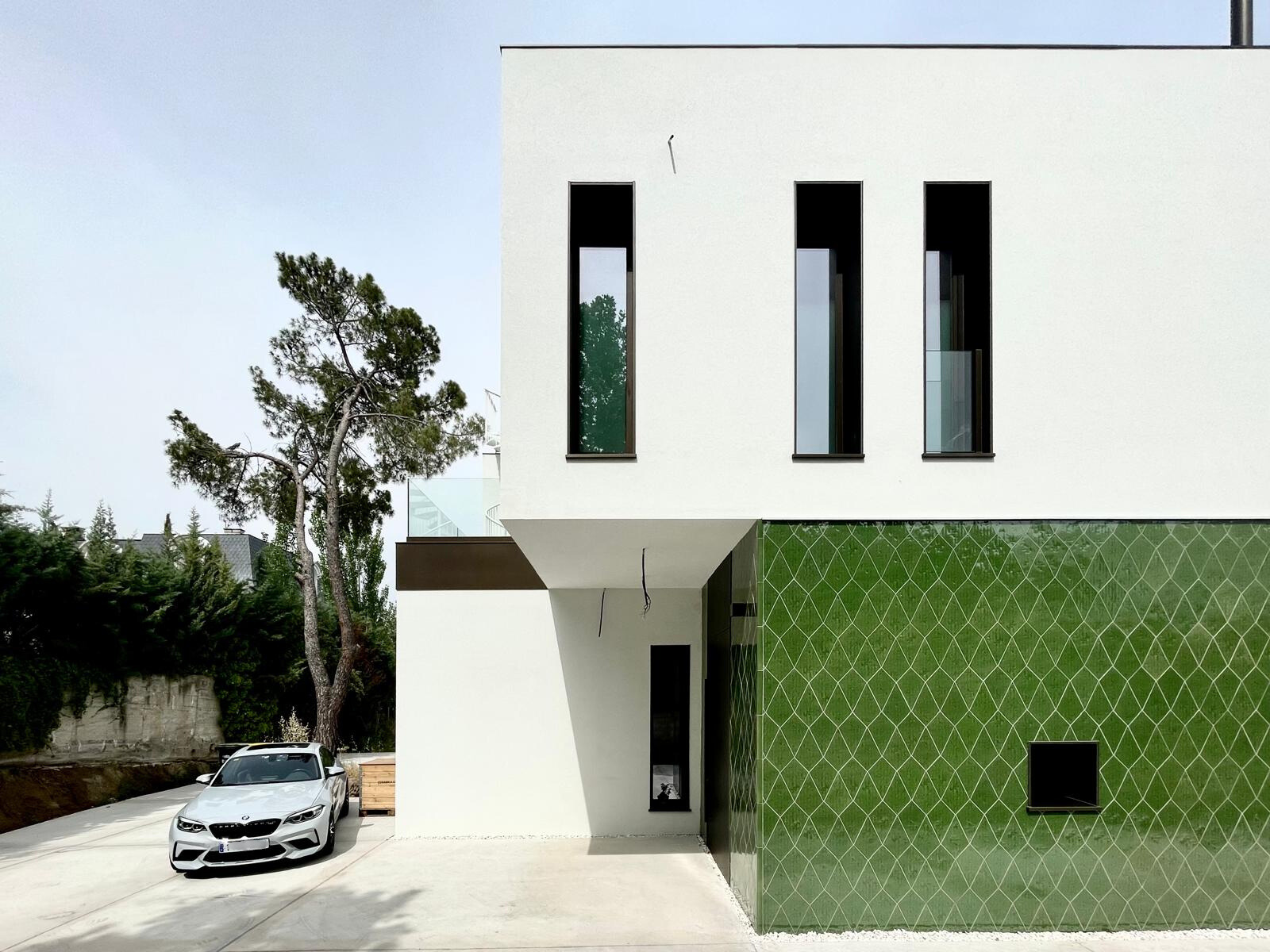
I was reminded of this recently standing outside a recently completed project in Madrid with Fran Saif, the architect who supervised the build. We had just walked through the finished house on a warm Madrid afternoon, and the temperature inside was noticeably different from the street. Cool, quiet, comfortable in a way that is hard to explain if you have only ever lived in a poorly insulated building. Fran put it simply: “The performance is not only the numbers. The performance is for you to be comfortable there.”
That is what good building is. And it starts with the people.
Choose Your Team Before You Choose Your Plot
This is the advice Fran gave me when I asked him what he would tell a foreigner thinking of building in Spain, and it is worth sitting with for a moment. Most people begin the process the other way around: they find a plot, fall in love with it, and then try to assemble the professionals they need. The problem with that sequence is that by the time you realise your team is not right, you are already committed financially and legally.
Building a villa in Spain involves an architect, a technical architect, a contractor, a project manager, a lawyer, and, ideally, someone who can coordinate all of them and translate not just linguistically, but culturally and professionally between you and the Spanish system. Assembling that team after the fact, under pressure, rarely produces the best result.
The right team, assembled from the beginning, can save you money through better cost estimates in the design phase, time through better management of the building licence process, and a great deal of stress through clearer communication at every stage.
←
→
The Cultural Translation Nobody Talks About
One of the most useful observations Fran made during our conversation in Madrid was about communication. “Most of the problems you can find in construction work are communication problems,” he said. And the communication challenges when building in Spain as a foreigner run deeper than language.
Spain is a Mediterranean country with a different business culture, different working hours, different conventions around deadlines and decision-making, and a planning and licensing system that varies meaningfully from one municipality to the next. What is standard practice in the UK or Germany can seem unusual here and vice versa. The assumptions you bring from your home country, about contracts, about deposits, about what an architect is responsible for, may not map cleanly onto how things work in Spain.
I have spent over 30 years in Spain. My wife is Spanish, my family is Spanish. I know what it is like to look at Spain from the outside, and I know what it looks like from the inside. That dual perspective is not incidental to what we do at Eco Vida Homes. It is the whole point.
One Project, One Team
What Fran described about the Madrid project is something we aim to replicate on every build: a single, integrated team working on a single project, rather than a collection of independent professionals each managing their own piece.
“We have a project, the client, the technical office, and the contractor and we work all together on it,” he said. “That is the big thing.”
This matters in practice. When the design team, the project manager, and the contractor are working in isolation, information gets lost at each handover point. Decisions made in the design phase do not always translate correctly into the specification. Specification changes during construction do not always get costed accurately. The result, in the worst cases, is cost overruns and delays that could have been avoided.
When they work as a single team from the outset, the contractor is involved in cost estimates during the design phase. The project manager is aware of every technical decision. The architect and the contractor have an existing working relationship. Problems are identified earlier, and solutions cost less.
Managing Expectations Is Part of the Job
Fran was candid about one of the less obvious challenges of working with international clients: expectations. “They don’t know how building works and how much they can spend,” he said, “so you have to manage expectations all the time.”
This is not a criticism of clients. It is simply a description of reality. Building a villa in Spain is, for most people, the most complex project they will ever undertake and they are doing it in an unfamiliar country, in an unfamiliar language, with an unfamiliar legal and regulatory system. The gap between what someone imagines when they first contact us and what is actually possible on a given plot, within a given budget, under the applicable planning rules, is almost always significant.
Good practice is to surface that gap early. That means a development appraisal before any design work begins, a planning check with the local town hall, and a frank conversation about what the budget will and will not deliver. None of that is comfortable. All of it is necessary.
What the Finished Building Should Feel Like
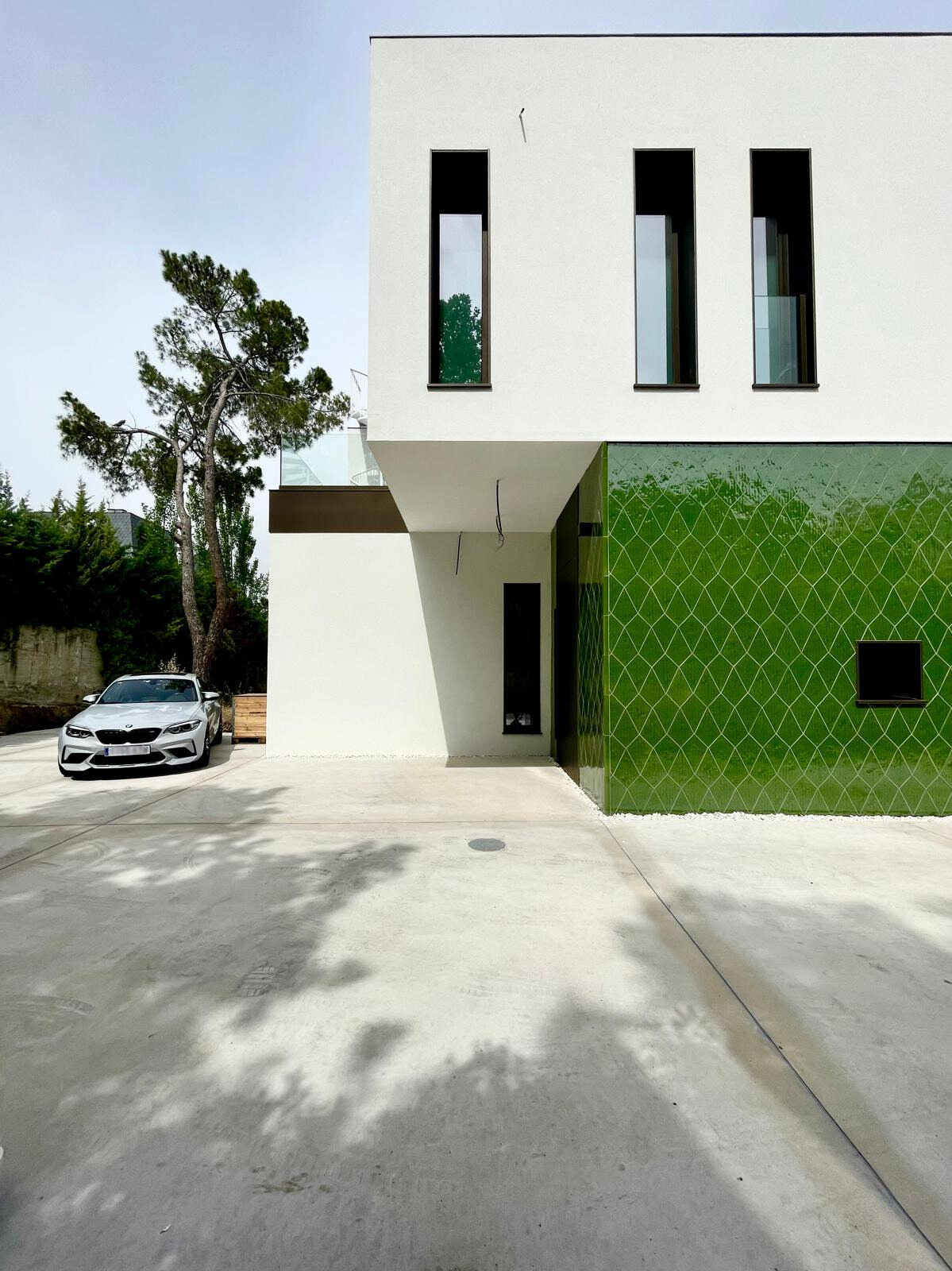
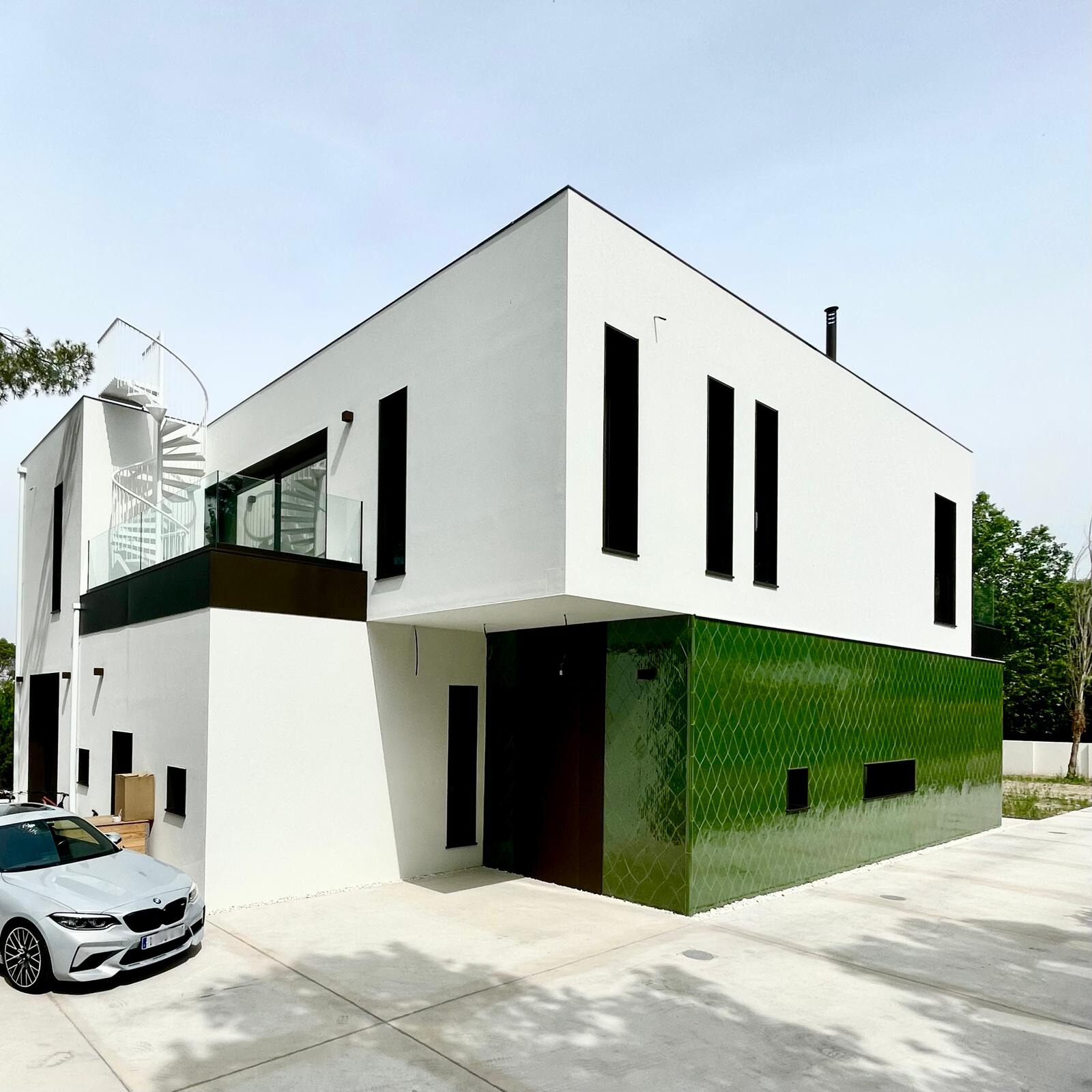
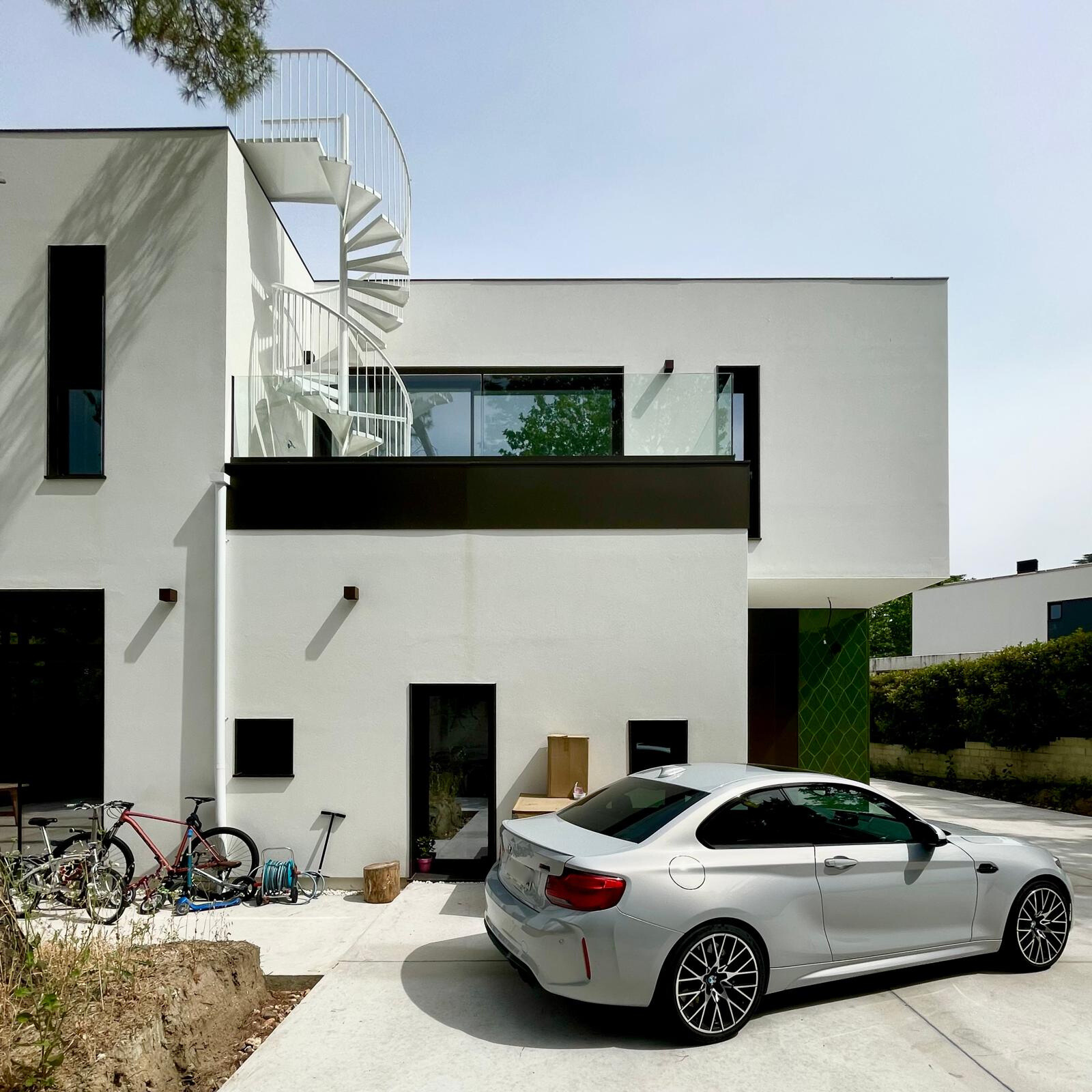
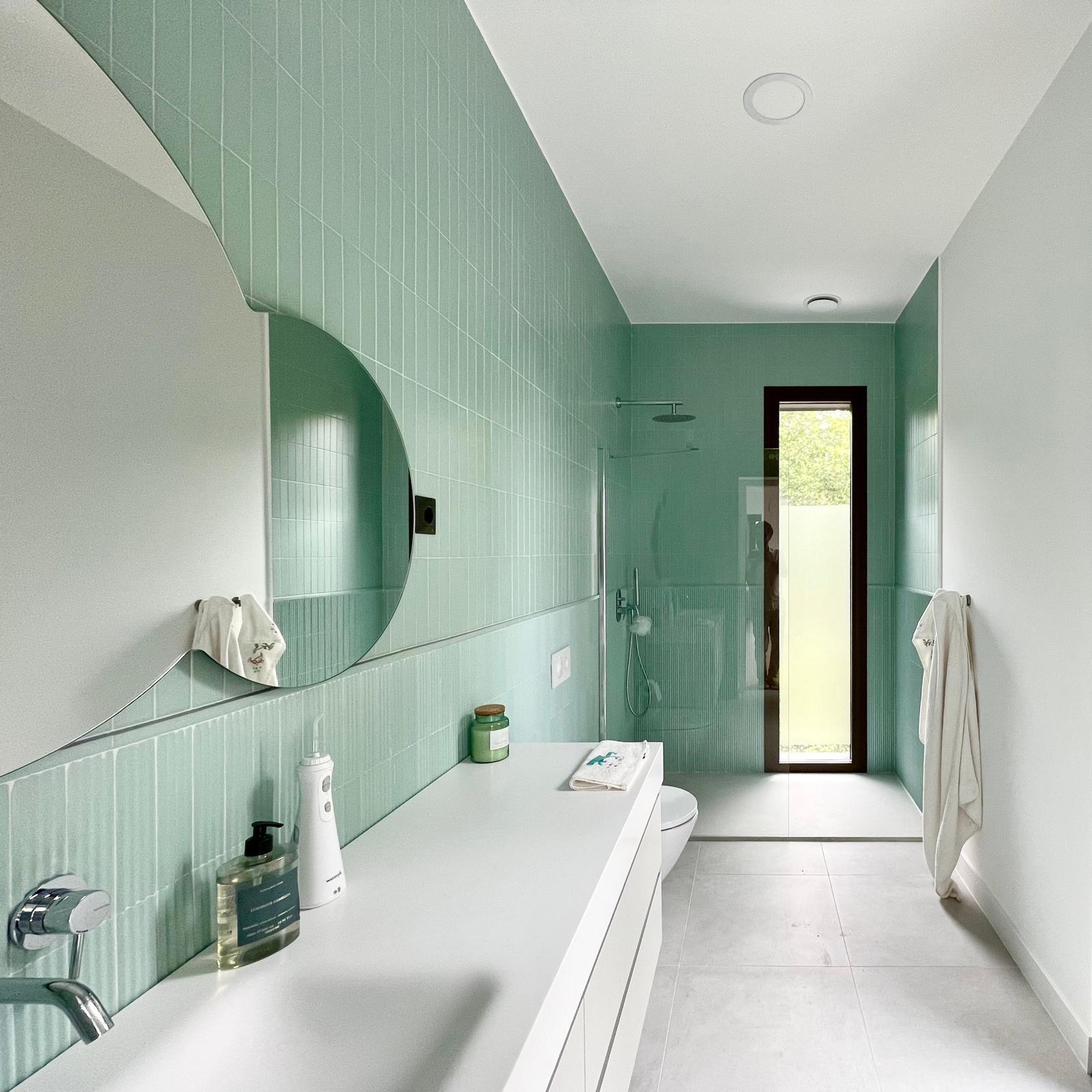
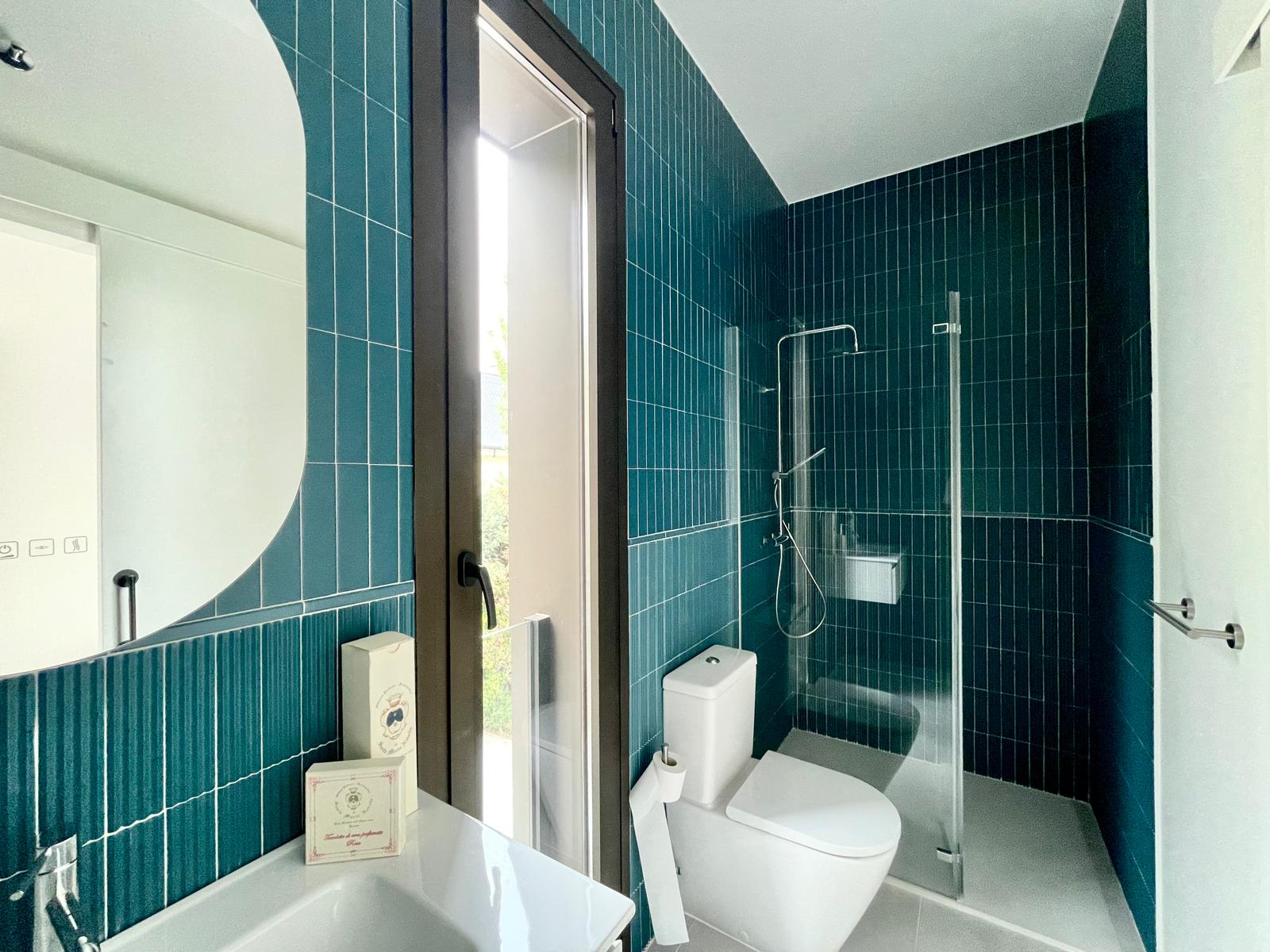
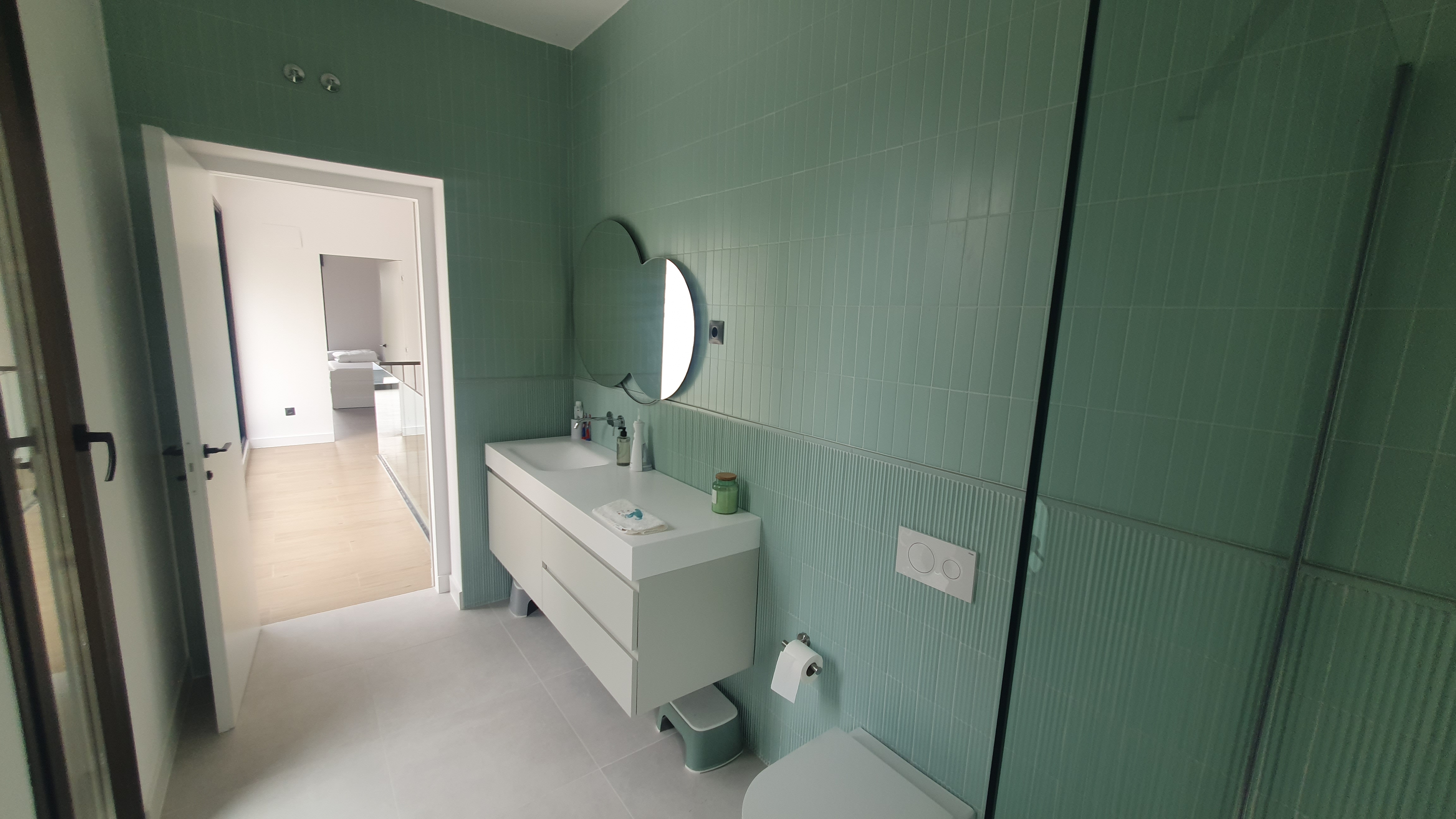
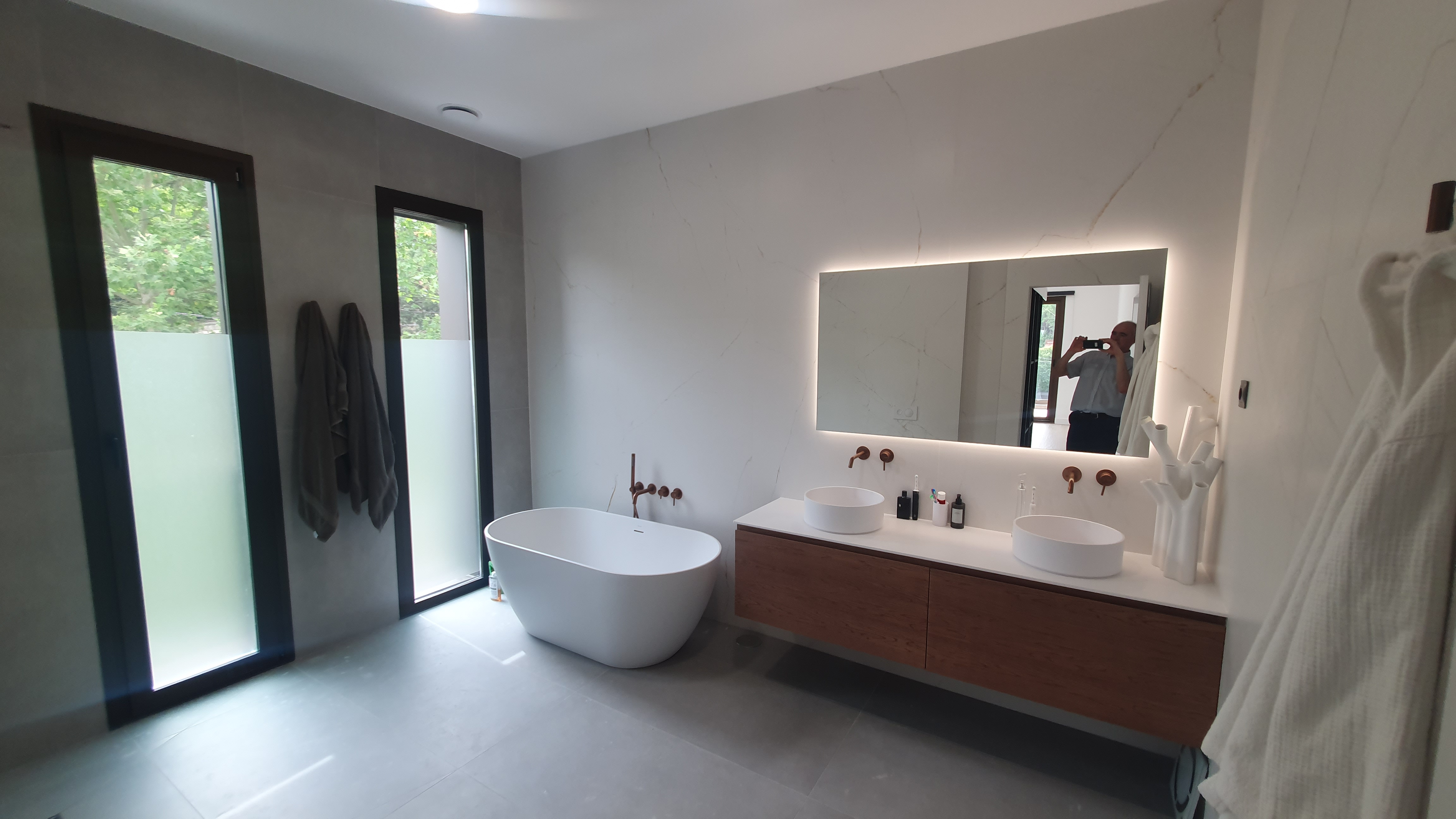
We spent time on site in Madrid that afternoon, and what struck me most was not the design, which is excellent by the way, but the physical sensation of being inside. On a warm day in a city that gets genuinely hot in summer and cold in winter, the building was calm. The light was right. The temperature was right. The air was clean and quiet.
That is not an accident. It is the result of good solar orientation, proper insulation, airtight construction, and a mechanical ventilation system that is doing its job without anyone noticing it. “Warm in winter, cool in summer, without burning money or fossil fuels.” That is what we design for on every project.
Fran described it as a “quiet place to be” and I think that is as good a description of a well-built home as I have heard.
Conclusion
Building a villa in Spain is complicated. Anyone who tells you otherwise is either not being honest or has not done it recently. But complicated is not the same as unmanageable. With the right team, assembled from the beginning and working together on a single project, the complexity becomes navigable. The cultural and legal translation gets done properly. The costs are controlled from the design phase, not discovered during construction.
The building standing behind us in Madrid is a good example of what that looks like in practice. A client who did her own design, supported by a team that handled everything else, from the bureaucracy to the build supervision, and ended up with a house that genuinely works.
You can watch the full conversation with Fran Saif on our YouTube channel. He speaks plainly about what it takes to get a project right in Spain which I think is worth ten minutes of your time if you are thinking about building here.
Seeing It for Yourself
You can watch the full video interview with Fran on our YouTube channel.
Planning your dream villa in Spain?
Whether you’ve already got a plot or you’re just starting to explore the possibilities, a call with John, our founder and British Chartered Surveyor, is the perfect place to begin. No pressure – just expert guidance from someone who’s been helping people build in Spain for over 30 years.
Let’s explore how your dream home could take shape.
Choosing the right Architect in Spain is more complex than most people expect legally, culturally and logistically. John Wolfendale and Madrid architect Fran Saif explain why the team you choose at the beginning of the process determines almost everything about how it ends.