Where to buy land on the Costa del Sol is the wrong question. The best plot is the one where the market overvalues something you do not need.
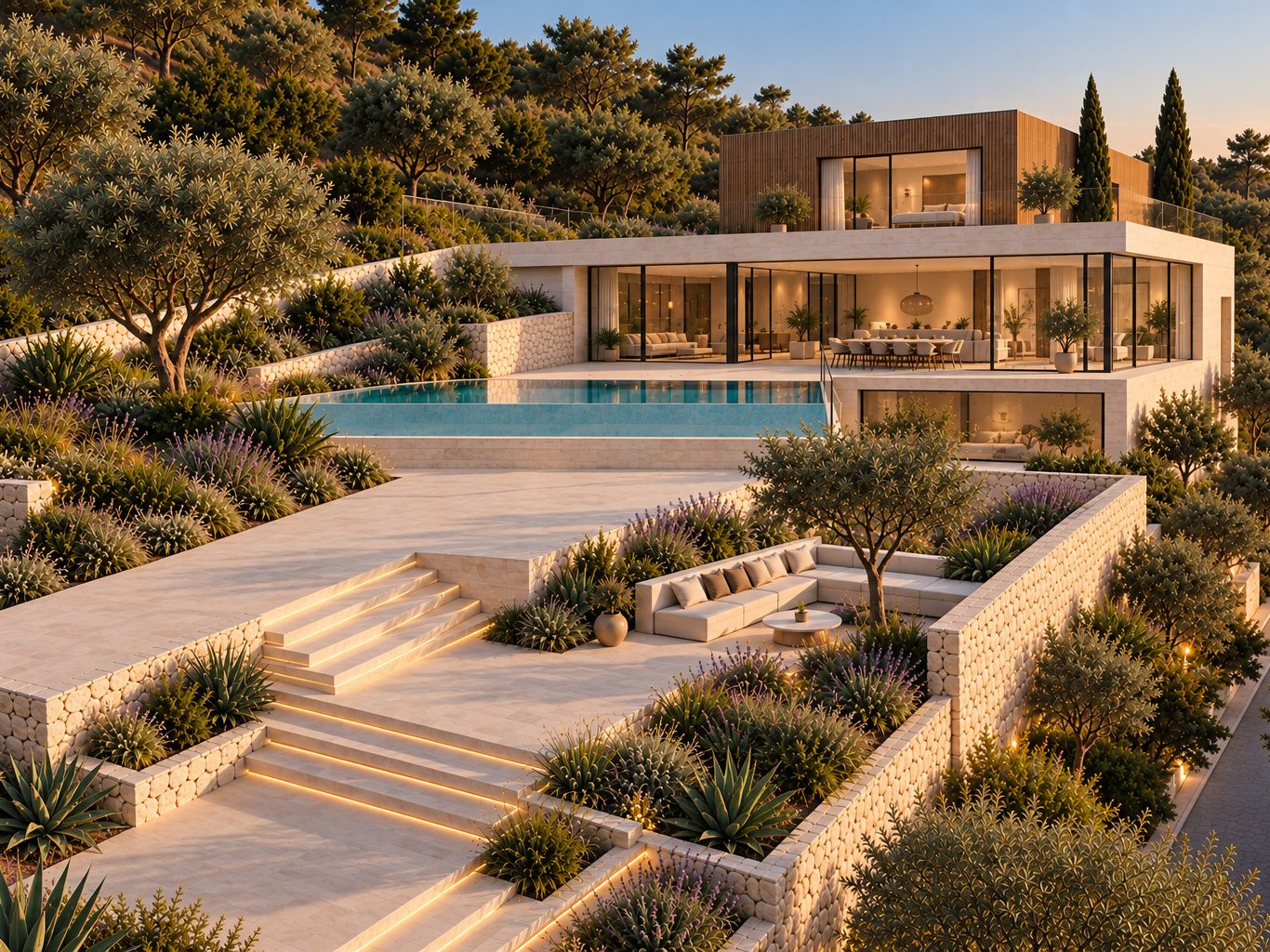
Designing a Villa in Spain: Why the Plot Comes First
Most people start with the house. They have a picture in their head of the kitchen, the terrace and the number of bedrooms, and then they go looking for land to put it on. I understand why. But when you’re designing a villa in Spain, the plot has usually made most of the important decisions before the architect draws a single line.
Good architecture starts with understanding the plot: the views, the orientation, the aspect, the topography, the surroundings and the economics. Over the years I’ve seen it again and again. The villas that work best are the ones where the design grows out of the land. The ones that struggle are where someone has tried to force a favourite floor plan onto a site that was never going to suit it.
Here is what that looks like in practice, with two very different plots of ours on the Costa del Sol.
What the plot decides before the architect does
It helps to think of each of those factors as a question the land is asking you.
Where are the views? That decides which rooms face which way, and how much glass you’ll want.
Where does the sun come from? Orientation is about comfort as much as light. A villa set out properly on its plot is far easier to keep warm in winter, cool in summer, without burning money or fossil fuels, and it works hand in hand with Passive House principles such as good insulation and high-performance windows.
Which way does the land fall, and how steeply? That decides how the house sits on the ground and how much of the hillside has to move.
What’s around it? Neighbours, roads and exposure to the wind all shape where the private spaces go and where the open ones go. If wind is a concern, Spain’s state weather agency, AEMET, publishes local data that is worth a look before you commit.
And what will all of this cost? This is the one people forget. Every one of those answers has a price attached, and a good design keeps that price under control.
When the view and the sun disagree
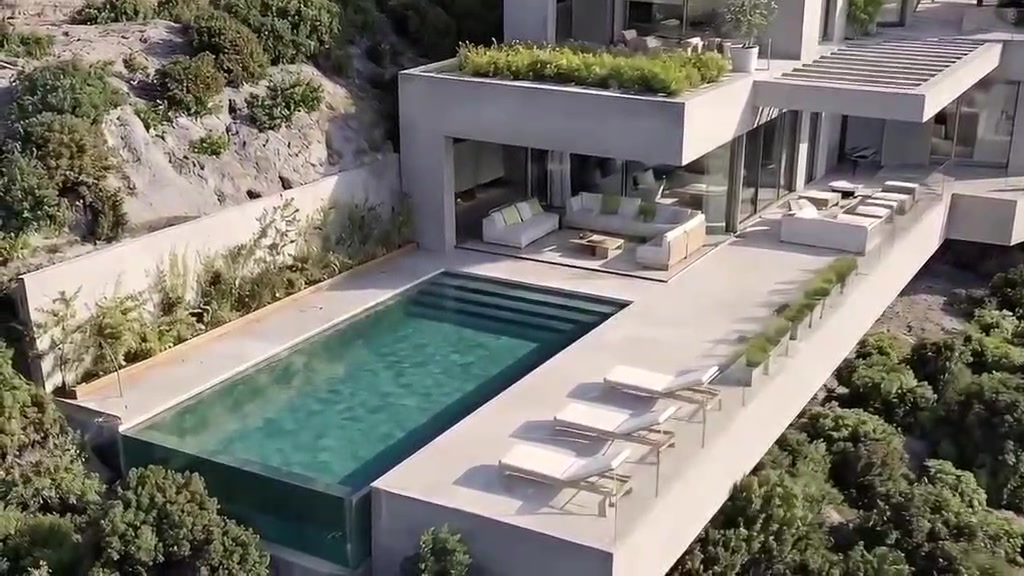
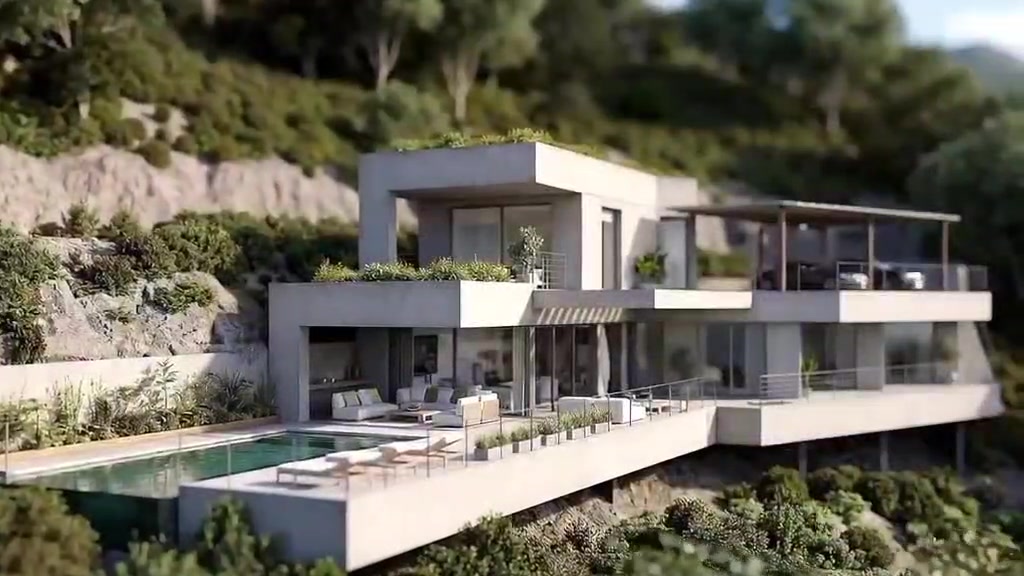
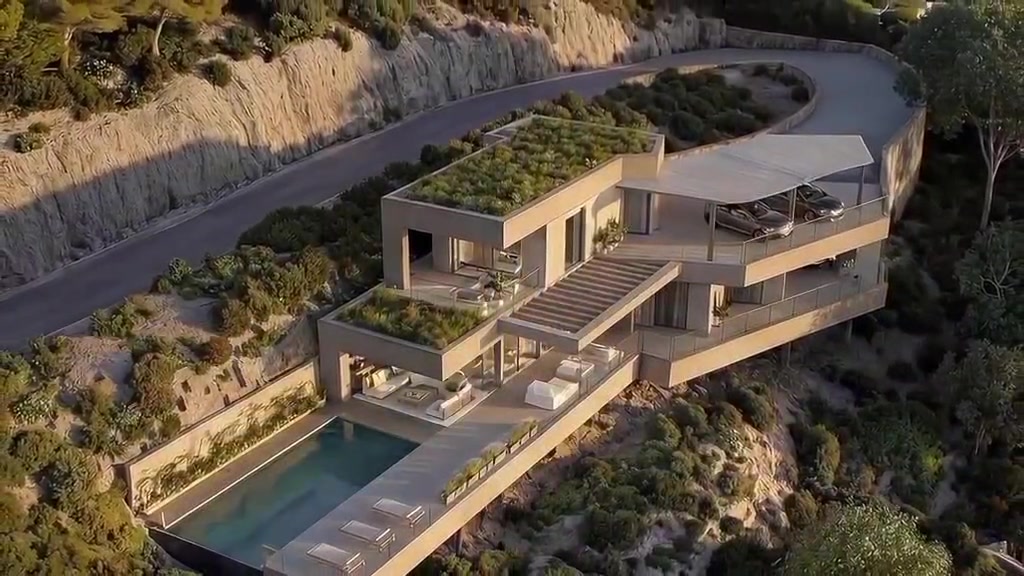
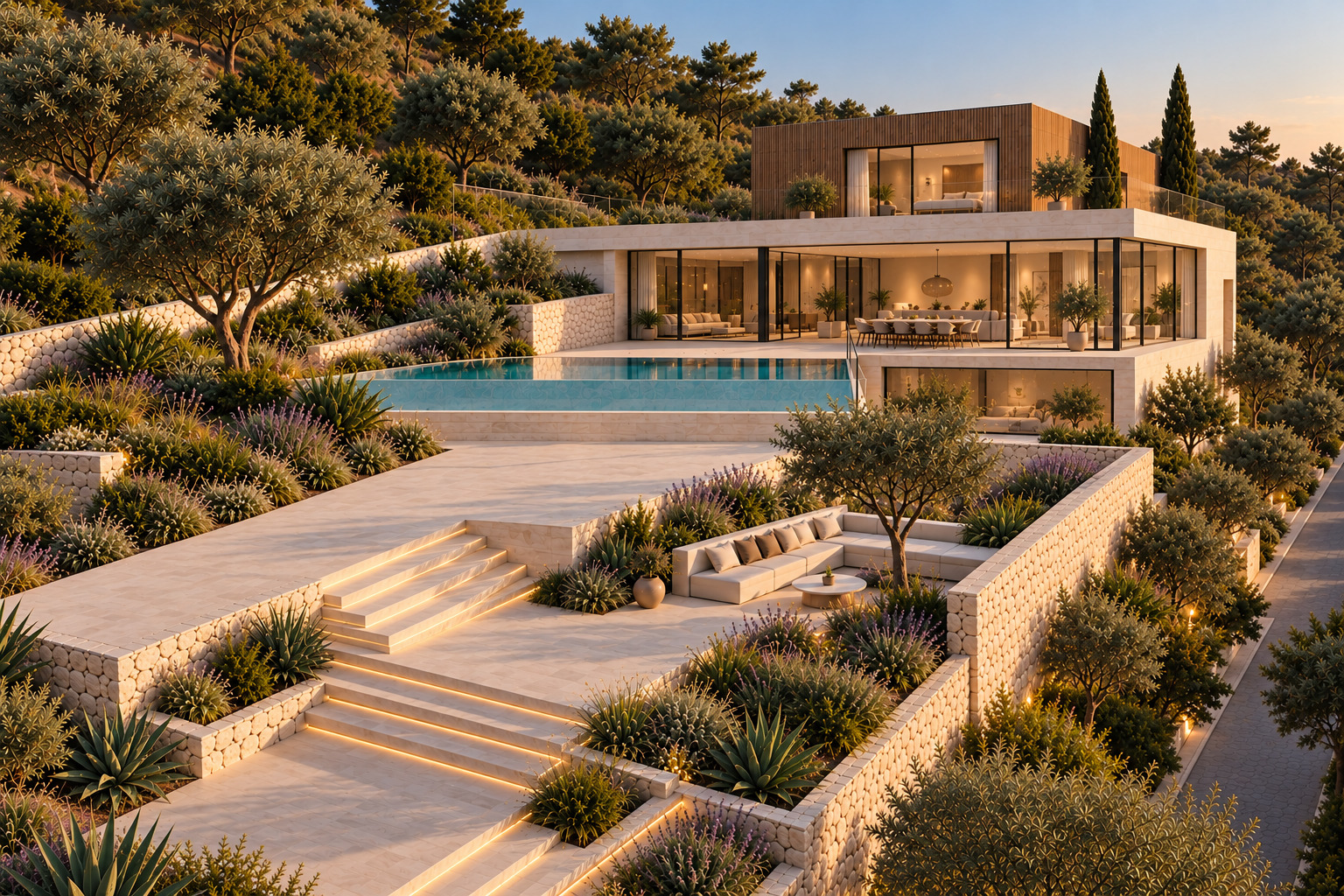
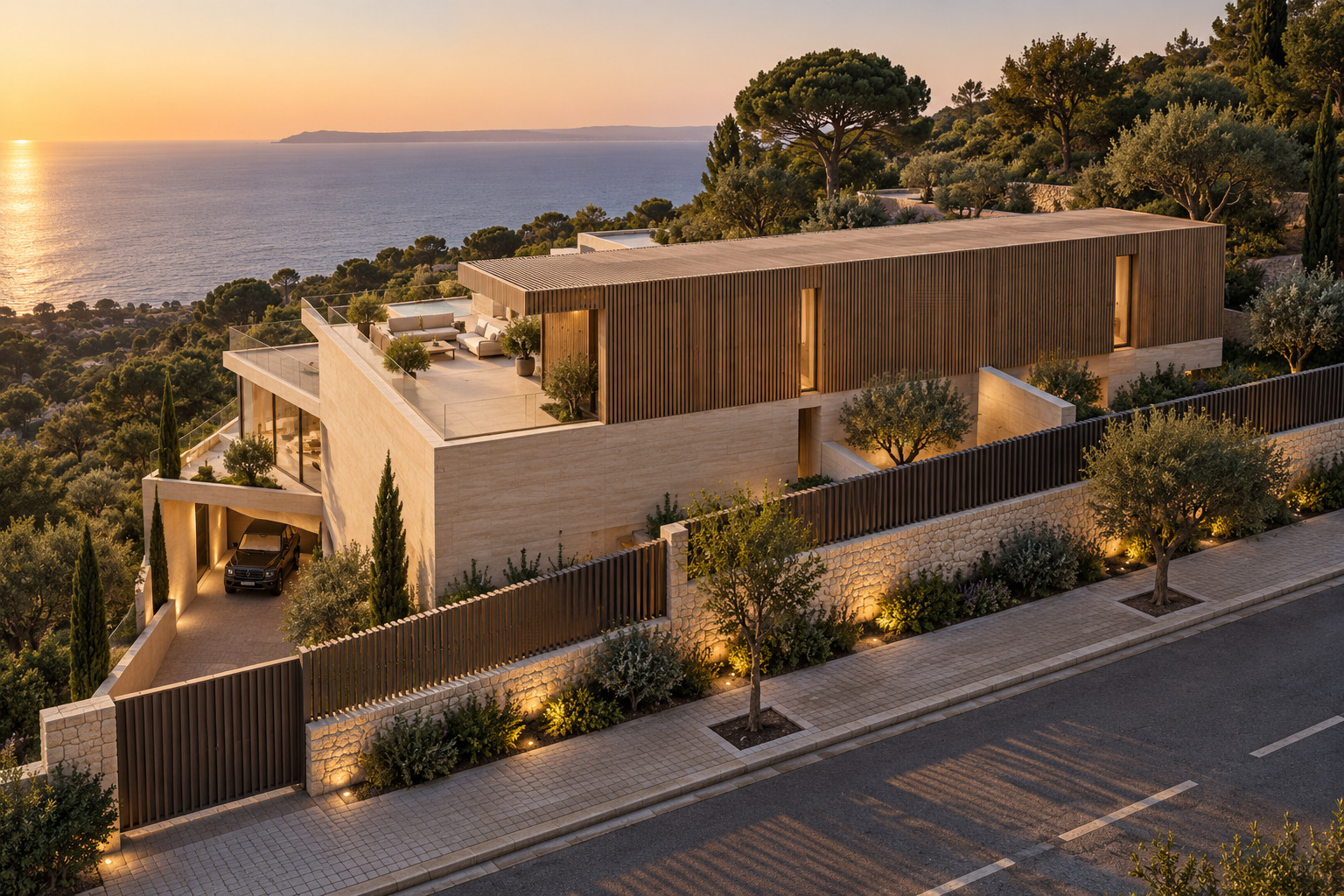
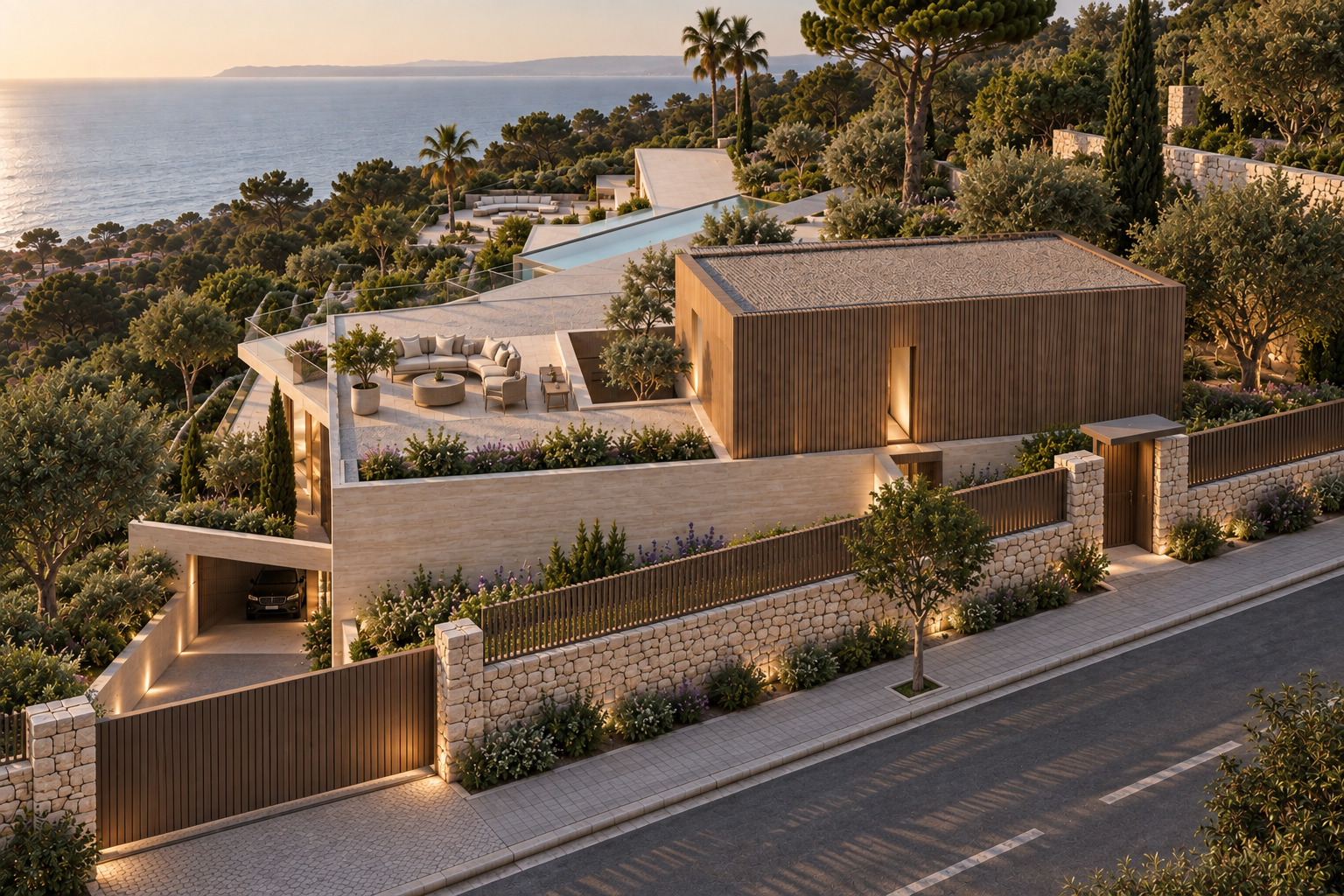
Our first plot is in Montemayor, in Benahavís, near Marbella. It is almost a cliff. It faces east, but the Mediterranean views are to the south.
That kind of mismatch makes a lot of people walk away from a plot. Build a simple house facing the way the land faces and you get the morning sun and a sideways glimpse of the sea.
Instead, the architect moved the villa out from the plot so that the open-plan living, kitchen and dining area, the pool, the shaded terrace and the master bedroom all face south. The three guest bedrooms are angled to catch the sea views too. The land faces one way and the house turns to face another, and that is really the whole trick.
Letting the house follow the slope
Steep land worries people because they imagine the cost of digging into it. Usually the answer is to let the house follow the ground.
On the Benahavís plot the design follows the contours. The villa is mainly on one level, with the master bedroom above and the parking on the roof. Parking on top of a house sounds unusual, but on a slope like this it means far less of the hillside has to be dug out, and that keeps the costs down.
There was one more thing in this plot’s favour. The land is classified as urban, so there was no problem getting a building licence. On a steep or unusual plot, that matters as much as any design decision. A clever house on land you can’t get a licence for is just a drawing. You can see how a plot is registered on the Spanish Catastro, although it is the town hall’s planning rules that decide what you can actually build.
When the view becomes the brief
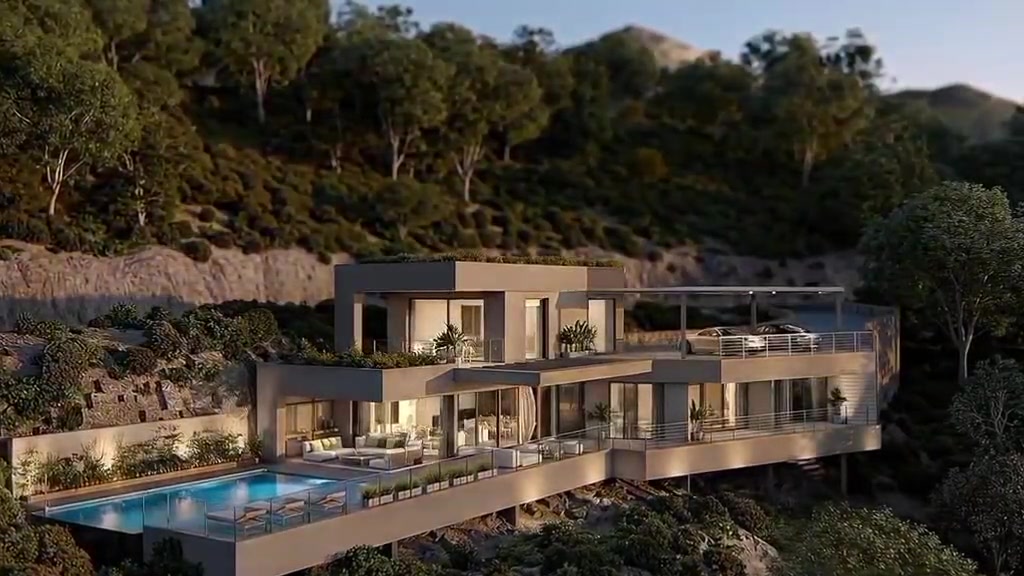
Our second plot is at Guadiaro, near Sotogrande. Our client is an entrepreneur from the Czech Republic and a very smart investor. He bought the land several years ago, and he took a few risks at the time with the characteristics of the plot.
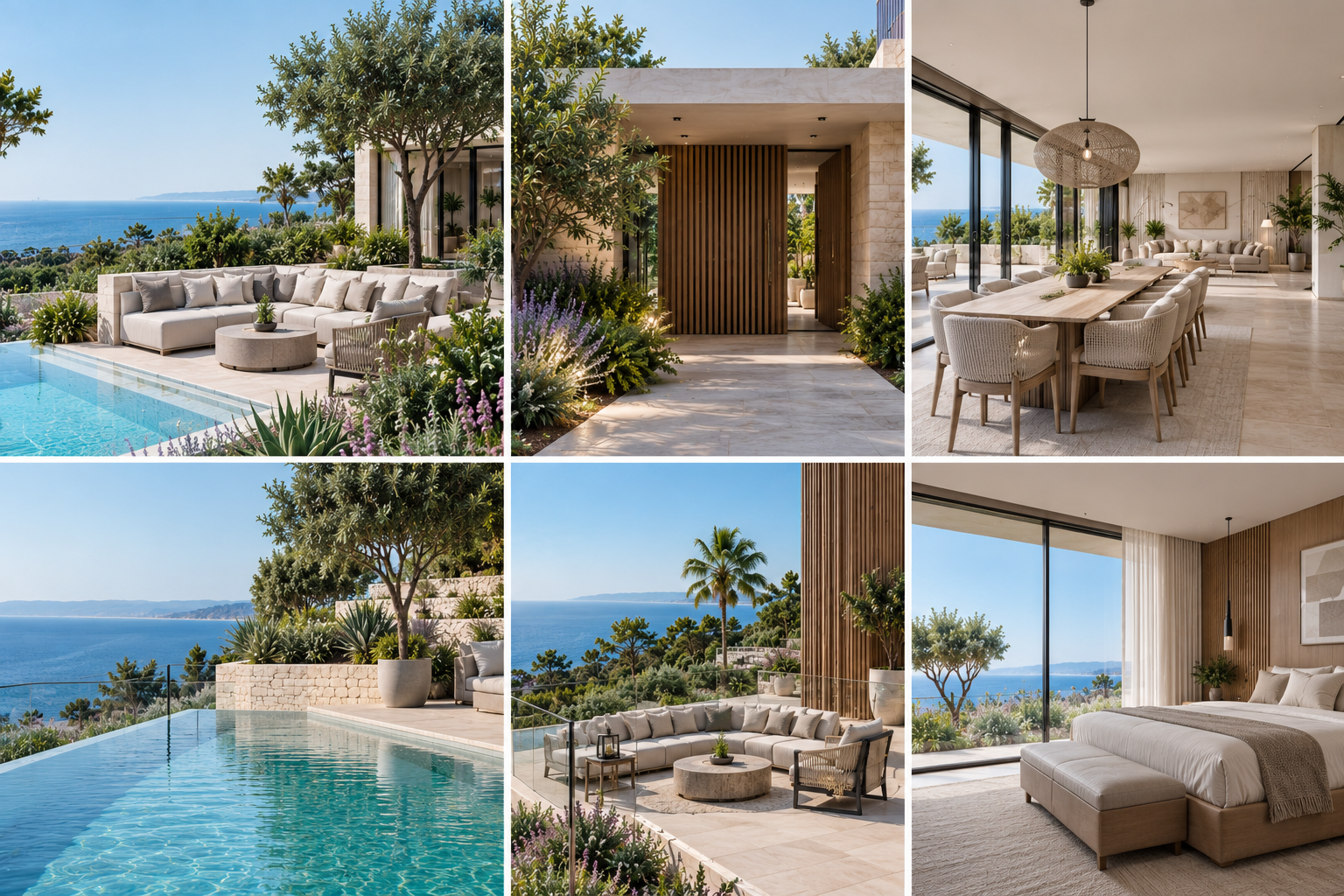
Here the plot asked something different. The view is out towards the marina of Sotogrande and the Mediterranean, so the whole villa is arranged around one line of sight. The first of his lifestyle goals is what I call the wow effect: “When you enter the building, the vista is going to open up through the living room, through the glass wall, across the shaded terrace where there’ll be dining al fresco, past the swimming pool, to the views of the marina of Sotogrande and the Mediterranean.”
Every room on that axis exists to protect it. Move one wall and you lose the moment you walk through the front door.
Every good view comes with exposure
A plot that opens to the sea is also open to the weather. So in the middle of the house there is an internal patio, sheltered from the wind, with sunken sofas, trickling water and lots of tropical plants and banana trees. It gives you somewhere to retreat to on the days when the terrace is too exposed.
Outside, there are extensive terraces with a fire pit and views across the Mediterranean, because in this climate so much of life happens outdoors. Your home starts at the front gate, not the front door. For the exterior we’re using natural wood, stone and texture “to break up the modern design and to give a feeling of being close to nature and a natural, relaxing environment.”
None of these choices came from a catalogue. Each one is an answer to something about this particular piece of land.
Why awkward plots are often the better buy
Both clients bought plots that plenty of people would have passed over, and both have done well from it.
At Guadiaro, prices have gone up since our client bought, and on the value of the plot alone I’m sure he has made a significant financial return. In Benahavís our client, a property professional himself, sold the plot with the project. The design added value even though the villa was never built.
A difficult plot is often priced as a difficult plot, and good design can find what others missed. But not every awkward plot is a bargain. Some are cheap for very good reasons. The risk is buying before you know what can legally be built, how the design will work and what it will really cost. That is the feasibility work to do before any money changes hands, and it’s the first step in building a villa in Spain safely. If you’re still deciding where to look, I’ve written about where to buy land on the Costa del Sol too.
Designing a villa in Spain around the land
When you’re designing a villa in Spain, read the plot first and let it write the brief. The views, the sun, the slope, the surroundings and the budget will tell you what the house should be, if you’re willing to listen. The two villas here look nothing alike, and that is exactly as it should be. It’s the starting point for every custom design and build project we take on.
If you’d like to see the Guadiaro plot and the architect’s first renders, I filmed on the site for our YouTube channel: Villa Design Near Sotogrande: The First Thing You See. It shows the view the whole house has been designed around.
Planning your dream villa in Spain?
Whether you’ve already got a plot or you’re just starting to explore the possibilities, a call with John, our founder and British Chartered Surveyor, is the perfect place to begin. No pressure – just expert guidance from someone who’s been helping people build in Spain for over 30 years.
👉 [Book Your Free Discovery Call]
Let’s explore how your dream home could take shape.
Book a private consultation
A confidential, no-pressure conversation to see if we’re the right fit.
